Operations concept
What is the drone used for, where are the limits, and when is a flight aborted?
BOS · Public Safety Organisations
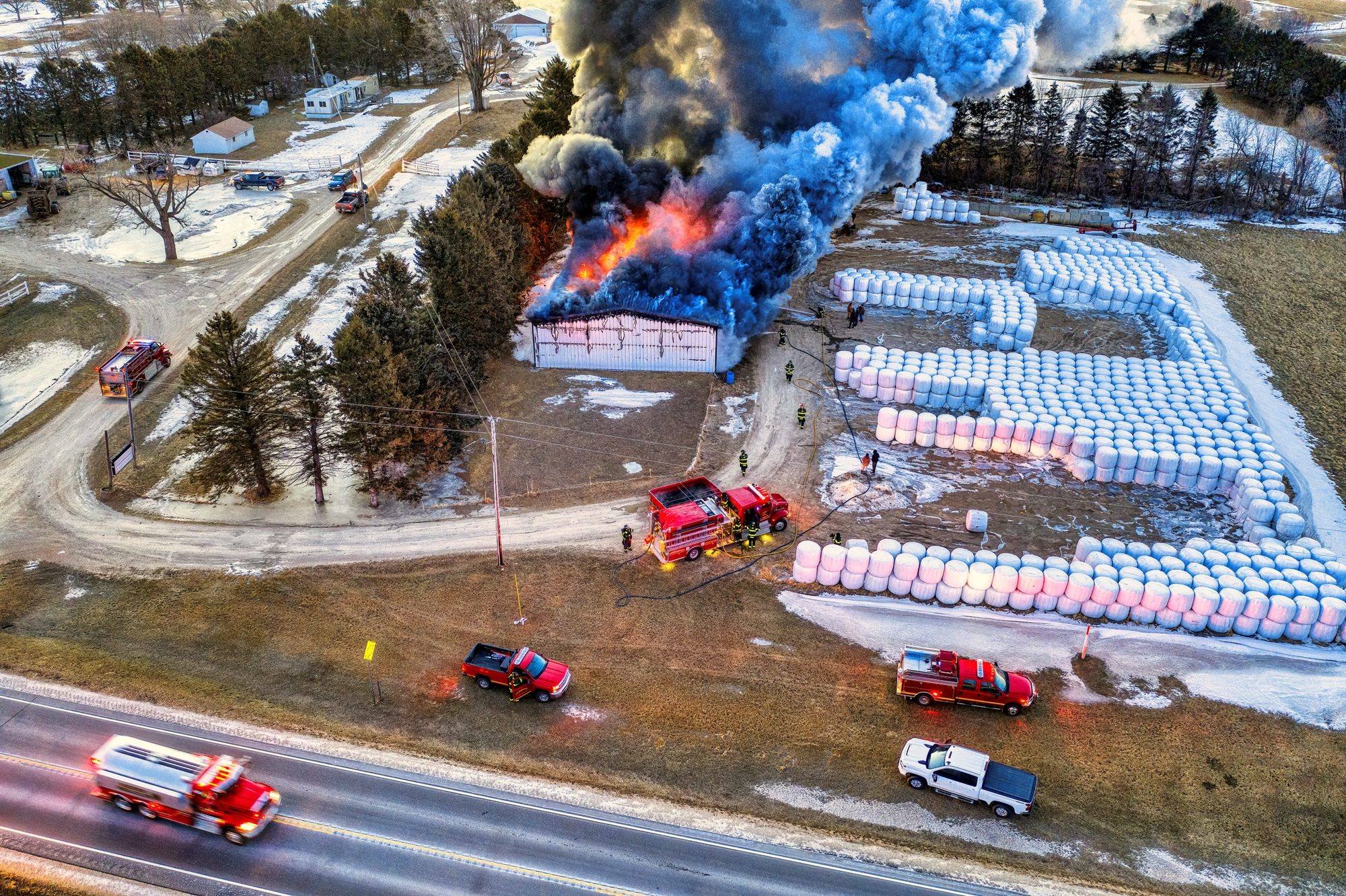
A drone only helps on scene if it is clear who flies it, who evaluates the picture and who decides on take-off and abort. We advise and train fire services, police, ambulance services and disaster relief in setting up their drone unit.
In brief
Blue Aviation advises and trains fire services, police, ambulance services, disaster relief and corporate security in setting up a drone unit: concept of operations, roles, procedures, documentation, data protection and staff qualification. Under section 21k of the German Air Traffic Regulations (LuftVO), authorities and organisations with security tasks do not need an operational authorisation for drones under 25 kg, but they are responsible for safe operation themselves.
Consulting building blocks
What is the drone used for, where are the limits, and when is a flight aborted?
Who flies, who observes the airspace, who evaluates, and who decides?
Checklists, communication, documentation and data protection, aligned with your existing procedures.
Which EU certificates (A1/A3, A2, STS) your personnel need and how they obtain them.
Reliable in the field
That is why roles, procedures and abort criteria are defined and practised beforehand.
For organisations
We shape the consulting around your organisation, whether fire service, ambulance service, police, disaster relief, industrial security or municipality. The result is a drone operation that still works when your most experienced pilot is off duty.
Frequently asked questions
As a rule, no. Under section 21k LuftVO, the operation of drones with a take-off mass of less than 25 kg by authorities performing their tasks, and by organisations with security tasks in emergencies, accidents and disasters, does not require an authorisation under Article 12 of Implementing Regulation (EU) 2019/947. Whether a specific flight is covered has to be checked case by case.
The organisation decides which qualification its staff must hold. We recommend following the EU certificates: the A1/A3 proof of competency and the A2 remote pilot certificate as a basis, plus operational training that practises roles, communication and abort criteria.
In four building blocks: a concept of operations with use cases and limits, a role structure for pilot, observer, incident command and analysis, procedures with checklists and documentation, and the qualification of the team. The technology is selected afterwards to fit.
At least a remote pilot and an airspace observer. Depending on the situation there is also incident command, which decides on launch and abort, and a person analysing the imagery. Tasks should be distributed so that operations do not depend on individuals.
Aerial images often show people, properties and number plates. Purpose, retention period, access and deletion of the recordings therefore belong in the concept of operations and should be agreed with the organisation's data protection officer.
Yes. We tailor consulting and training to the type of organisation, location and operation profile, on your premises if you wish. We clarify the scope in an initial conversation and prepare an individual quote. Request a quote.
As of October 2026, without guarantee; this is not legal advice. The authoritative source is section 21k of the German Air Traffic Regulations (LuftVO).
For your organisation
Scope and format depend on your organisation, location and operational profile. After an initial consultation you receive an individual offer.